Beyond Wholesale: How to Succeed in Developing Your Brand in China
28 June، 2026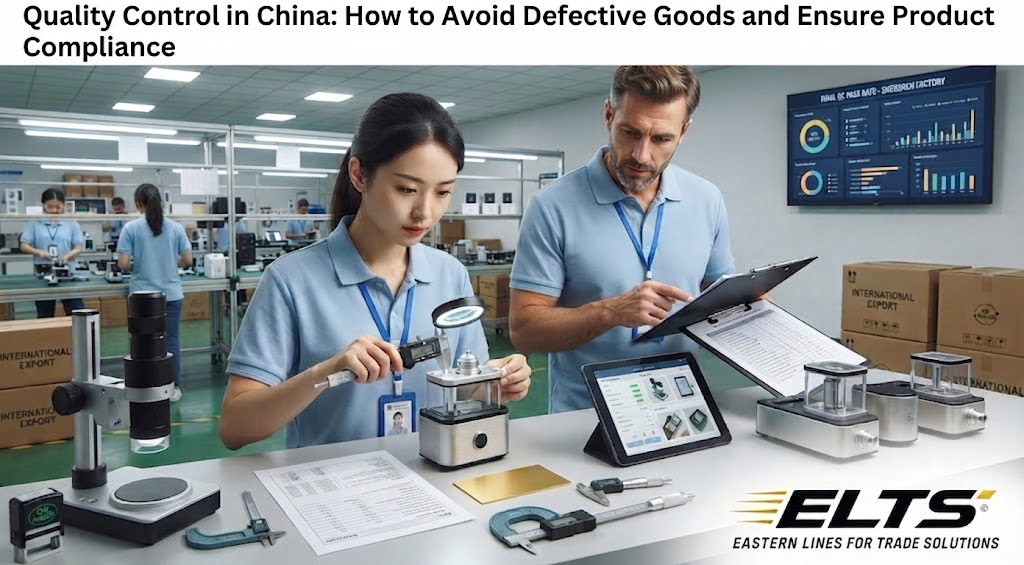
“Importing from China is one of the most profitable commercial ventures in today’s world, yet it is equally fraught with risks if not managed wisely. Have you ever considered the scale of the loss if your million-dollar shipment arrived with defective products? Or if material specifications were changed without your knowledge? This is where Quality Control in China comes into play—not just as an optional procedure, but as a critical safety valve for your business.
Quality Control in Chinese Factories
Quality control does not merely mean inspecting the product at the end of the production line; it is an integrated methodology that begins with raw materials. Chinese factories operate under varying standards, and relying solely on a factory’s reputation is insufficient. Professional oversight involves visiting the factory, monitoring storage conditions, inspecting worker efficiency, and ensuring that production lines adhere to the technical standards you agreed upon. The absence of oversight means leaving the fate of your brand entirely to chance.”
Pre-Shipment Inspection (PSI)
Pre-shipment inspection (PSI) serves as your final line of defense. This inspection takes place when the goods are at least 80% ready and fully packed. Our team conducts on-site random sampling according to AQL (Acceptable Quality Limit) standards to ensure every piece matches the Golden Sample. This procedure gives you “veto power” over the final payment to the factory; if the shipment does not meet the standards, it will not be shipped, and the remaining funds will not be released.
Avoiding Defective Goods from China
Avoiding defective goods starts with the principle of “prevention rather than cure.” Defects often arise from the use of inferior materials or negligence during the assembly stages. We shut the door on these disasters by reviewing raw material specifications before they enter production. A professional trader does not simply rely on photos; they demand inspection reports that verify the product’s resistance to abrasion, heat, and corrosion.
Quality Standards for Imported Products
Quality standards vary depending on the target market. A product destined for the European market is completely different from one intended for the Gulf or the United States. You must ensure that your product complies with certifications such as CE, RoHS, REACH, or UL. Failure to comply with these standards means your goods may be held at customs or recalled from the market later, which would represent a catastrophic failure for your business.
How to Ensure the Quality of Chinese Products
Ensuring quality requires three pillars:
- Defining Standards: Establishing precise technical specifications in the contracts.
- On-site Verification: Physical presence inside the factory.
- Laboratory Testing: Sending samples to independent laboratories to verify the chemical components.
Quality Inspection Companies in China: Why Do You Need a Professional Intermediary?
Professional inspection companies like (ELTS) do not work for the factory; they work for you. We act as your eyes on the ground in China. Using an independent inspection company breaks the factory’s comfort zone, as they know there is an “observer” who will evaluate their work objectively.
Frequently Asked Questions (FAQ) About Quality Inspection
-
Q: When should I request quality inspection?
A: Quality inspection should be conducted at multiple stages (at the beginning of production, during production, and before shipment).
-
Q: Can a factory refuse the entry of an inspection company?
A: A reliable factory will never refuse. If a factory denies entry to the inspection team, it is a strong red flag indicating potential manipulation or fraud.
-
Q: Is quality inspection expensive?
A: The cost of inspection is a negligible fraction compared to the cost of recalling an entire shipment or losing the reputation of your brand.
-
Q: What is the fundamental difference between “Quality Control” (QC) and “Quality Assurance” (QA)?
A: Quality Assurance (QA) is a preventive process focused on improving the entire production system to minimize errors before they occur. Quality Control (QC), on the other hand, is the process of inspecting the final product or samples during production to detect defects. In our work, we integrate both to ensure the highest levels of protection.
-
Q: Why can’t I rely solely on the factory’s own inspection?
A: Factories often have their own quality departments, but ultimately, they report to management that aims to cut costs and speed up production. The presence of a neutral third party like ELTS ensures you receive an unbiased report that reflects reality, not just what the factory wants to show.
-
Q: What happens if the inspection team finds critical defects in the shipment?
A: In the event of critical defects, the shipping process is halted immediately, and our team issues a “Non-Conformity Report.” We negotiate on your behalf with the factory to rework the defects or replace the damaged items entirely before the final balance is paid.
-
Q: What is the Acceptable Quality Limit (AQL), and is it necessary?
A: AQL is an international statistical system that determines the number of samples to be inspected based on the total shipment size. It is essential because it sets the maximum number of defects allowed before a shipment is rejected, providing a clear common language between you and the factory.
-
Q: Does quality inspection guarantee a 0% defect rate?
A: Statistically, no inspection can guarantee a 100% defect-free shipment unless every single piece is inspected (which is extremely costly). We use random sampling according to global standards to ensure that the defect rate remains within very safe commercial limits, minimizing risks to the lowest possible level.
-
Q: Can I request special inspection for electronic or complex products?
A: Certainly. Technical products require “Functional Testing,” such as circuit tests, thermal stress tests, and software verification. You should always provide the inspection team with a list of required tests before they begin.
-
Q: How long does it take for a quality inspection report to be ready?
A: Under normal circumstances, we send the preliminary inspection report to the client within 24 hours of the on-site inspection completion to ensure quick decision-making regarding the shipment.
-
Q: Can a quality inspection company help me improve the product itself, not just inspect it?
A: Yes, that is at the core of our work in product development. By inspecting initial samples, we can identify design weaknesses or material issues and provide engineering suggestions to the factory to improve product performance before it enters mass production.
-
Q: What if the inspection team cannot reach the factory due to unforeseen circumstances?
A: We rely on our extensive on-site network. If obstacles arise, we have emergency protocols that include direct communication with factory management or the use of remote inspection techniques (Video Inspection) to ensure your timeline is not delayed.
-
Q: What documents should I provide to the inspection team before they start working?
A: To ensure inspection accuracy, you must provide: 1) The approved Golden Sample, 2) Technical Specifications (Tech Pack), 3) The Packing List, and 4) The required inspection standards (AQL).
Quality Control in China: How to Avoid the Risks of Sourcing from Untrustworthy Suppliers?
The biggest risk in importing is not shipping, but the “hidden supplier.” Many suppliers on B2B platforms are actually small trading companies that do not own factories; instead, they purchase from low-quality workshops and slap their own brand on the products. Quality inspection uncovers this manipulation early; a legitimate factory welcomes inspection, while an untrustworthy supplier creates excuses to block the arrival of inspection teams. The presence of our field team means we verify the factory’s official documents and ensure they match the actual product.
The Importance of Quality Control in China for Protecting Your Private Label
When you place your brand logo on a product, you are putting your reputation on the line. With Private Label, any defect in a single piece is a blow to your brand identity. Quality control protects you from the “sudden quality shifts” that occur during mass production. At ELTS, we consider quality inspection part of the “brand-building” process, as we ensure that every piece reaching your customers reflects the standards you promised, thereby building long-term loyalty to your brand.
Does a Factory Visit Eliminate the Need for Quality Inspection in China?
A fatal mistake! Visiting a factory during the negotiation stage gives an impression, but it does not guarantee the quality of actual production. The factory might be clean and organized during your visit, but when your order is fulfilled, production might be outsourced to other lines or made using cheaper materials. A factory visit is an “administrative” procedure, while quality inspection is a “technical” one that ensures what you agreed upon is exactly what gets packed into the cartons.
Quality Inspection Guide for E-commerce Beginners in China
For every beginner on Shopify or Amazon FBA: Do not be lured by a low product cost. Beginners often fall into the trap of relying on a single excellent sample, only to be surprised by completely different products later. Your guide to success is to commit to the “Golden Sample” and conduct a Pre-Shipment Inspection (PSI). Remember, losing $500 on an inspection saves you from losing thousands of dollars on reshipping or returns.
How to Choose the Best Quality Inspection Company in China to Ensure Your Profits?
Do not look for the cheapest; look for the most “honest.” A professional company is one that provides detailed reports with photos and videos, not just a paper questionnaire. Look for companies like ELTS that have field teams, understand the technical nature of your product, and speak the language of Chinese factories fluently. The company that protects your profits is the one that does not hesitate to halt the shipment if it is not compliant.
The Risks of Lacking Oversight on Chinese Production Lines
A lack of oversight means the potential for “material substitution.” A factory might start by using high-quality plastic for the first 100 pieces, then switch to recycled materials to reduce its own costs and increase profits. Without oversight, you will receive fragile goods that may have chemical odors or faded colors, and you will find yourself in a losing legal battle with a supplier in China.
How to Read Inspection and Cargo Check Reports in China
A good report is not just photos; it is analytical data. At ELTS, we provide reports that include: functional tests, stress tests, and photos of defects (if any) categorized as Minor, Major, or Critical. Reading these reports gives you the ability to make an informed decision: should we ship the goods, or should we request a rework?
The Golden Sample: The Cornerstone of Quality Inspection Processes
There is no production without a “Golden Sample.” This sample is not just a piece; it is a legal reference. If the product in the sample weighs 200 grams, every piece in the shipment must weigh 200 grams. We use this sample as a “ruler” during every factory visit. The existence of this sample ends any argumentative discussion with the supplier when defects are discovered.
The Difference Between Random Inspection and Full Inspection in Factories
Sampling Inspection is based on scientific AQL standards and is the best option for most large shipments to save costs. Full Inspection, however, is only used for very high-value products or when there are significant doubts about the quality of a specific batch. We always advise you to follow the scientific standard that balances cost and security.
How to Turn Quality Inspection from an Added Cost into a Competitive Advantage?
When your goods are meticulously inspected and classified as “high-quality products,” you can market that to your customers (e.g., “Product Subjected to Strict Quality Control”). This raises the perceived value of your brand, allows you to increase your selling price, and reduces your return rate. Quality inspection is not an expense; it is an investment in building a lasting business legacy.
Need urgent advice? We are here to serve you around the clock:
-
WhatsApp / Direct Line: [+86 130 7333 1094]
-
Email: [info@eltschina.com]
-
Website: [Visit our Contact Us page] to fill out a request form. One of our experts will respond within minutes.
“Building on what we established in [Importing from China: The Comprehensive Guide from Idea to Profit] regarding building your brand, we move today from the contracting phase to the phase of meticulous execution. Commercial excellence does not depend solely on the product, but on strict oversight; therefore, we place in your hands this specialized guide on quality inspection, to be your protective shield that ensures your products leave the factory in full compliance with your global standards.”