Crafting Excellence: How to Turn Your Product Idea into a Market-Leading Brand
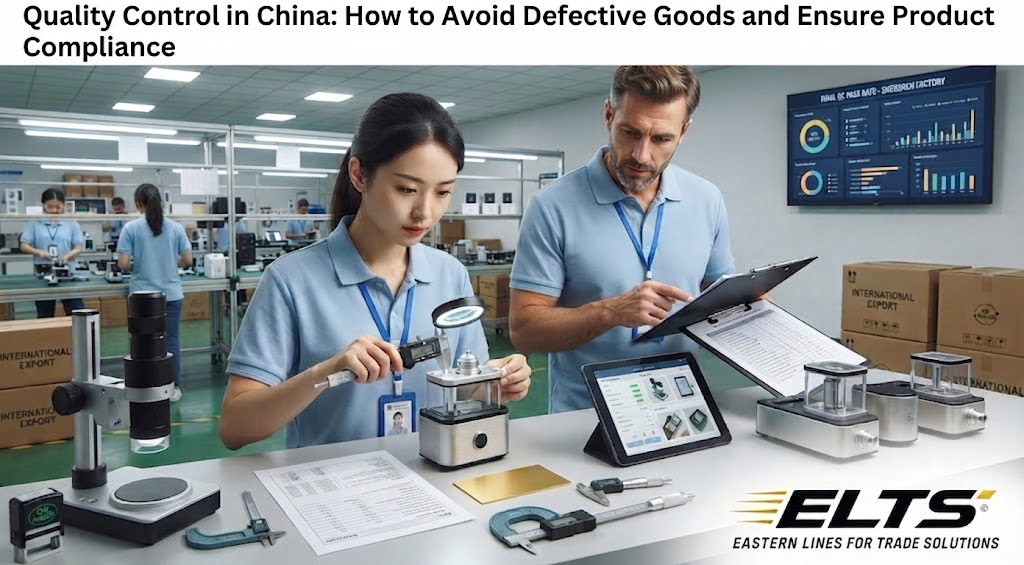
28 June، 2026Quality Control in China: How to Avoid Defective Goods and Ensure Product Compliance
6 July، 2026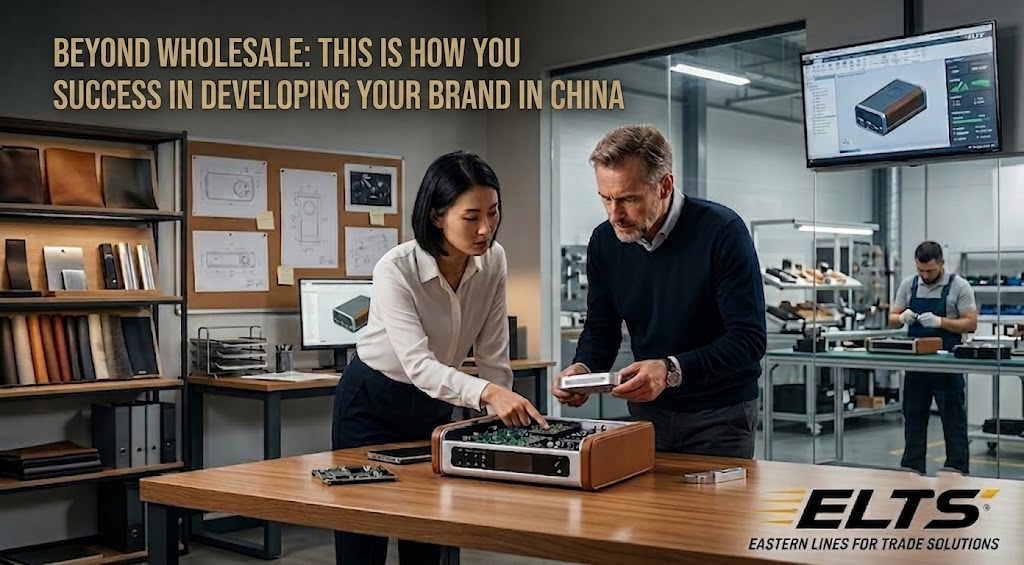
“In the fast-paced world of international trade, many merchants find themselves stuck in the ‘traditional import trap.’ You enter a trade show in China, select a ready-made product, slap your logo on it, and return home only to find hundreds of other merchants selling the exact same product—at the same quality, or perhaps even at a lower price—on e-commerce platforms. This ‘commoditization’ is the number one enemy of any business aspiring for growth and long-term success. Is it time for you to transition from being a ‘product seller’ to a ‘brand creator’?”
Why do successful merchants stop buying off-the-shelf products?
“Traditional importing relies on the principle of ‘pre-existing products.’ Here, you are a follower of the market and the factory; you lack the power to customize, you possess no exclusivity, and any shift in market trends leaves you vulnerable. A merchant aiming for success in 2026 realizes that real value lies in ‘innovation,’ not just ‘cost-cutting.’ When you own your own unique design, you are no longer just selling a product; you are selling solutions, quality, and an identity that competitors cannot easily replicate.”
“Traditional importing makes the merchant dependent on the factory. When you buy a ready-made product, you do not own its exclusivity.
- Case Study: Imagine a merchant named Ahmed, who was importing ready-made ‘desk lamps.’ A month after his initial success, the factory sold the exact same product to one of his competitors at a lower price. Ahmed lost his market share. By transitioning to private manufacturing, he now owns a unique design that no one else has, which restored his customers’ loyalty.”
Beyond Traditional Importing: A Strategic Vision for Growth
“Transitioning to private manufacturing is not merely a luxury; it is a ‘protective shield’ for your business. When you move from being a mere intermediary or importer of ready-made products to becoming a brand owner, you take the driver’s seat. This shift means you gain control over materials, design, packaging, and, most importantly, the ‘perceived value’ for the end consumer. It is the step that transforms your business from a ‘fleeting trade’ into a ‘business asset’ whose market value grows over time.
Transitioning to private manufacturing means moving from ‘middleman’ to ‘creator.’
- Case Study: Sarah was selling generic kitchenware and faced persistent issues with coating quality. After switching to private production, she enforced her own quality standards, which reduced her return rate from 15% to less than 1%.”
The First Step in Developing Your Brand: Turning an Idea into a Prototype
“Everything starts with an idea. But in the world of engineering and manufacturing, an idea alone is not enough. The first step in developing your brand is to bring this idea to life through a ‘Prototype.’
At this stage, we are not talking about a finished product, but an engineering model that tests the feasibility of your idea in the real world. We use modern technologies such as 3D Printing or CNC machining for metal and plastic to put a tangible model in your hands. This is where the real testing begins: Is the texture right? Is the weight balanced? Do the technical functions meet your expectations? This stage saves you months of trial and error, because identifying flaws in a prototype is a thousand times easier and cheaper than discovering them after thousands of units have already been produced.”
- Technical Overview:
- 3D Printing: Ideal for complex prototypes, as it builds the product layer by layer. It is fast and cost-effective for experimentation.
- CNC Machining: A precise ‘carving’ process where a solid block (of metal or wood) is shaped by a computer-controlled machine. We use this when we need a solid model to test real-world mechanical strength.
- Case Study: Khalid wanted to design an innovative phone case. He used 3D printing to test the shape, and then CNC machining to test the material’s durability, ultimately succeeding in designing an ultra-durable product.
Quality and Functional Testing: How to Ensure Your Product is Unbeatable?
“Once the prototype is complete, we move to the ‘Proof of Concept’ stage. Here, we don’t just measure aesthetics; we measure efficiency. Does the product withstand daily use? Do the moving parts align with the required engineering design?
Subjecting the prototype to quality tests at this early stage is what distinguishes major brands from the rest. We don’t wait for the product to reach the customer only to discover it is prone to damage; instead, we perform a ‘product life cycle simulation’ at the factory. This gives us the confidence that what we produce is a product that can withstand the rigors of use and carry your brand name with pride.
We don’t just focus on the look; we test the ‘performance.'”
- Performance Checklist:
- Drop Test: Testing impact resistance.
- Heat and Humidity Resistance Test: Ensuring durability under environmental stress.
- Wear and Tear Test: Checking the mechanical integrity of moving parts.
Engineering Safety: The Role of Engineering Samples (ES) in Protecting Your Business
“The process is not complete without a rigorous examination of what we call ‘Engineering Samples’ (ES). At ELTS, we consider this stage the first line of defense against commercial disasters. These samples are not just for display; they are actual tests of the chemical and physical properties of the materials. Is the plastic eco-friendly? Are the metals corrosion-resistant? Verifying these details from an engineering perspective protects you from a full product recall in the future—a failure we never accept for any of our clients.”
Engineering Samples involve inspecting materials before they enter the production line.
- Case Study: A factory attempted to use a cheap plastic material that contained toxic substances. Thanks to the ELTS engineering sample inspection, we identified the flaw before mass production began, saving the client from the catastrophe of having their product pulled from global markets.”
International Compliance: How to Make Your Product Ready for Global Markets?
“If you aspire to reach markets in Europe, America, or the Gulf, there is no substitute for international compliance. Certificates such as CE or RoHS are not just paperwork; they are your product’s passport to enter major retail outlets. We ensure that every stage of manufacturing adheres to these standards, transforming your idea from a local product into a global competitor.”
- CE Certification: Essential for the European market.
- RoHS Certification: Ensures the product is free from hazardous materials.
Technical Challenges in Developing Your Brand
“Transitioning from an ‘idea’ to a ‘production line’ is full of technical challenges. A design may look perfect on paper, but during execution, issues such as injection angles, heat distribution, or material interference can arise. Our expertise lies in anticipating these challenges before they occur. Developing your brand in China requires an expert eye that never compromises on the finest technical details, as any negligence at this stage—such as an unvetted change in materials—could lead to a disaster in final quality.”
The biggest challenge is the ‘quality discrepancy’ between the sample and mass production.
- Case Study: A merchant faced an issue with plastic discoloration. Thanks to our technical supervision, we codified ‘raw material standards’ into the contract, which ensured color consistency in every single piece.”
The Gold Standard: The “Golden Sample” Philosophy as a Legal Benchmark
“Before mass production begins, we approve what we call the ‘Golden Sample.’ This is the final, certified version upon which contracts are sealed. Not a single piece is manufactured in the factory unless its specifications match this sample 100%. This sample serves as the ‘ruler’ against which we measure every shipment that leaves the factory, and it is your legal safeguard, ensuring your rights in the event of any defects.”
Competitive Advantage in Developing Your Brand
“Competition today is not won by price alone, but by uniqueness. Developing your brand gives you a competitive edge by owning an ‘Exclusive Design.’ When a customer sees your product, they find a creative touch and practical functions that they cannot find in generic alternatives. We assist you in studying real market needs, then translating those needs into competitive features embedded into the core of the product from the very first moment of its design.”
- Why Strive for Excellence?
- Increased Profit Margins.
- Building a Strong Brand Identity.
- Independence from Price Fluctuations of Ready-Made Products.
Why does ELTS Insist on Strict Quality Control Protocols?
“Quality is not a coincidence; it is the result of strict protocols. We don’t just visit the factory once; we monitor production lines, inspect raw materials, and verify safety standards for every single batch. We believe that the success of your business is our own success, so we put ourselves in your shoes as a decision-maker protecting their investments.”
We are present at the factory, supervising packaging and conducting random inspections of products before shipment.
Profitability Strategies in Brand Development
“Many believe that private manufacturing is costly, but the truth is that it opens doors to profit margins that are unavailable in wholesale trading. When you are not restricted to a ‘ready-made’ product with a fixed market price, you gain the ability to control production costs by selecting materials and functions that fit your budget. Developing your brand through private manufacturing eliminates middlemen and increases customer loyalty, thereby raising the real value of every sale you make.”
- Case Study: A toy merchant, by developing a unique private product, was able to sell it at a 40% higher price than competitors because the product offered a unique ‘educational’ and developmental feature.
Avoiding Disasters: Fatal Mistakes During Mass Production
“The biggest mistake merchants make is leaving the factory to operate without supervision. Mass production requires constant monitoring. Fraudulent substitution of materials for cheaper alternatives, or neglecting periodic inspection processes, are all risks that we close the door on through our teams stationed on the ground in Chinese factories.”
- The Golden Rule: Never pay the final balance until a Final Pre-Shipment Inspection (PSI) report is completed.
The Decisive Step: Developing Your Brand with the Experts
“Now that the path ahead is clear, the question remains: Are you ready for the next step? The journey of developing your brand is an investment in your commercial future. Do not leave the success of your business to chance. At ELTS, we possess the field experience, the relationships with top-tier factories, and the scientific methodology to turn your ideas into a profitable and sustainable reality.”
The Decision That Will Define the Future of Your Business
“International trade in 2026 is unforgiving to the hesitant. The gap between the merchant who ‘imports goods’ and the merchant who ‘builds brands’ will only continue to widen. Today, you face two choices: continue to compete fiercely for razor-thin profit margins, or start building a commercial legacy of your own.
Do you have a product idea that you would like to transform into a competitive brand? Contact us now for a free consultation with our experts in product manufacturing and development in China!”
Frequently Asked Questions (FAQ)
-
What is the difference between 3D Printing and CNC in prototype manufacturing?
3D printing builds the shape by adding material layer by layer (ideal for complex geometries), whereas CNC carves the shape out of a solid block of material (ideal for high-strength and precision parts).
-
Is manufacturing a private product in China very expensive?
Not necessarily. Private manufacturing reduces waste and grants you higher profit margins, which offsets development costs in the long run.
-
How do I ensure the factory won’t steal my idea?
By using legal contracts such as Non-Disclosure and Non-Use Agreements (NNDA) and working with professional intermediary firms like ELTS, which implement strict intellectual property protection protocols.
-
What is a “Golden Sample” and why is it important?
It is the final, approved piece that serves as the benchmark. Any deviation from it during mass production is considered a breach of contract.
-
Can I build a brand on a limited budget?
Yes, by starting with the development of one simple, unique product and scaling up gradually, rather than launching a massive product line all at once.
-
When should I start looking for a factory?
As soon as your initial design (Concept Design) is complete and the required technical specifications for the product have been defined.
Need urgent advice? We are here to serve you around the clock:
-
WhatsApp / Direct Line: [+86 130 7333 1094]
-
Email: [info@eltschina.com]
-
Website: [Visit our Contact Us page] to fill out a request form. One of our experts will respond within minutes.
“As a continuation of our comprehensive guide on [Importing from China 2026: The Ultimate Expert Guide from Idea to Profit], and now that you are capable of identifying reliable factories and avoiding unnecessary middlemen, we present to you today the strategic roadmap for transitioning from a mere importer of goods to the owner of a brand that competes with the industry giants.”